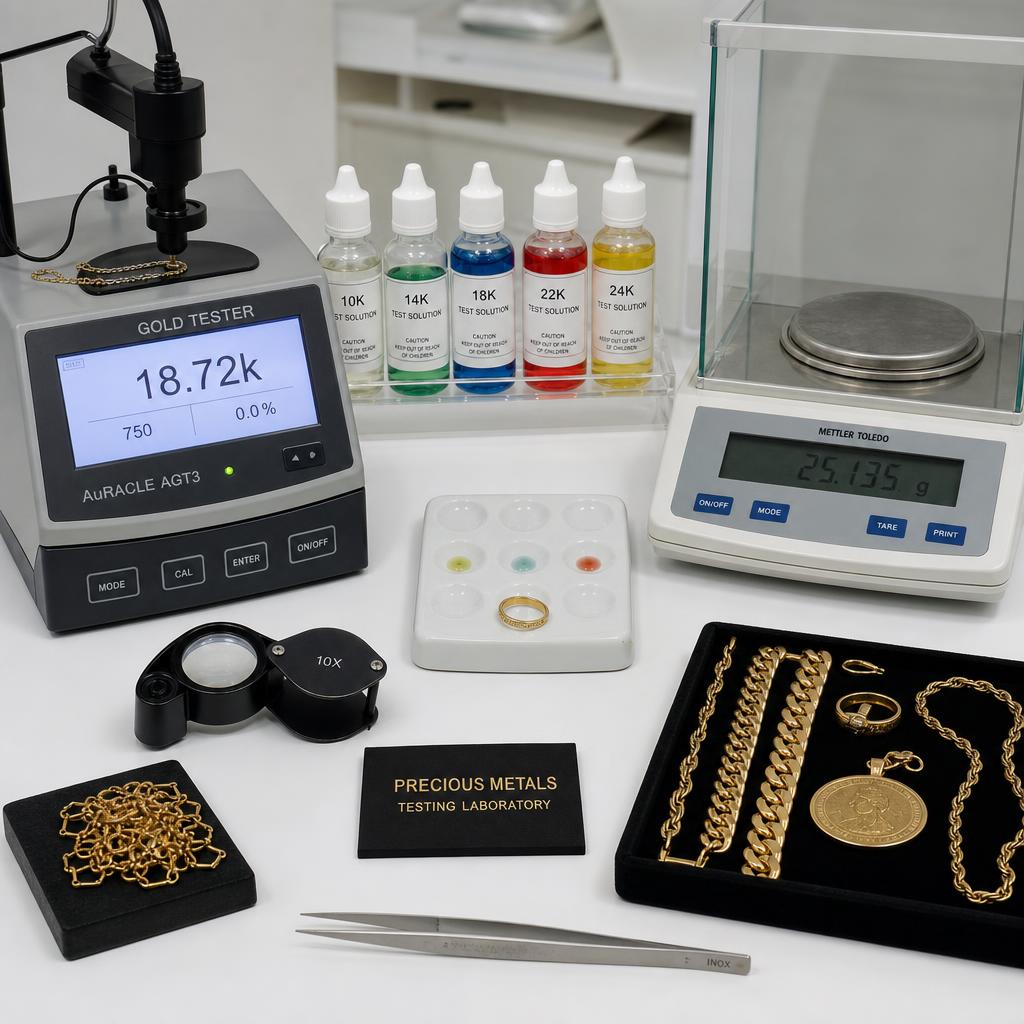
Transparency is the foundation of every appraisal we do at Gold Buyers Connecticut. When you hand us your gold, silver, or coins, you deserve to know precisely how we're determining their value — not just a number on a piece of paper. We use a two-step testing process: a traditional scratch test for a rapid first read, followed by our Sigma Metalytics professional scanner for non-destructive, laboratory-grade confirmation. Here's exactly how both work.
Why Testing Matters for Sellers
Gold purity — measured in karats or fineness — is the single biggest variable in determining what your items are worth. A 24K piece contains nearly twice the gold of a 14K piece at the same weight. An inaccurate test means either you're underpaid or the buyer overpays. Neither outcome is good for a long-term relationship. Our two-method approach eliminates guesswork and gives both parties confidence in the result.
Step 1: The Scratch Test
The scratch test has been used by goldsmiths for centuries and remains a fast, reliable first indicator. We use a black basalt touchstone — a fine-grained stone that holds a clean streak from metal without contaminating it. Here's the process:
- 1Your item is rubbed firmly against the touchstone, leaving a visible metallic streak
- 2We apply a calibrated acid solution — typically nitric acid for lower karats, aqua regia for higher purities
- 3The streak's color change (or lack thereof) reveals the approximate gold content
- 4A streak that dissolves quickly indicates lower purity; a streak that resists acid indicates high purity
The scratch test is fast and informative, but it tests only the surface of the streak — not the interior of the item. That's why we always follow up with the Sigma Metalytics scanner for a non-destructive, full-depth reading.
Step 2: The Sigma Metalytics Scanner
The Sigma Metalytics Precious Metal Verifier is a professional instrument used by dealers, banks, and mints worldwide. It uses electromagnetic (sigma) technology to measure the electrical conductivity of metal — a property that is uniquely predictable for each alloy composition. Unlike X-ray fluorescence (XRF) or acid testing, the Sigma reads through the full depth of the piece, not just the outer layer.
What the Sigma Scanner Tests
- Gold in karats from 8K through 24K — including 10K, 14K, 18K, and 22K
- Silver items — sterling (92.5%), coin silver (90%), and fine silver (99.9%)
- Gold and silver bullion coins — American Eagles, Maple Leafs, Krugerrands, and more
- Silver bullion bars and rounds — identifies genuine .999 silver from silver-plated counterfeits
- Platinum — distinguishes from white gold, palladium, and other similar-looking metals
What the Sigma Detects That Acid Cannot
The most important advantage of the Sigma scanner is its ability to detect tungsten-filled or gold-plated counterfeits. Tungsten has a density nearly identical to gold, making it impossible to detect by weight alone. However, its electrical conductivity is completely different. The Sigma catches tungsten-core fakes instantly — something acid testing cannot reliably do. For bullion coins and bars, this is critical.
You Watch the Entire Process
We conduct both tests in front of you at our counter. You'll see the touchstone reading, the acid reaction, and the Sigma scanner's digital readout. We explain what each result means in plain language, show you the spot price we're using, and then calculate your offer openly. No back rooms, no mystery.
How Testing Affects Your Payout
- 24K / 999 fine gold: ~99.9% gold content — highest payout per gram
- 22K / 916: ~91.6% gold — excellent return, common in coins like the American Gold Eagle
- 18K / 750: ~75% gold — strong return, typical of Italian and European fine jewelry
- 14K / 585: ~58.5% gold — most common in US jewelry, still pays very well at current spot
- 10K / 417: ~41.7% gold — minimum US legal karat, lower but still meaningful value
Ready to find out what your gold or silver is worth? Bring it in for our free two-step test — scratch test and Sigma scanner — and walk out knowing the exact value before you decide anything.