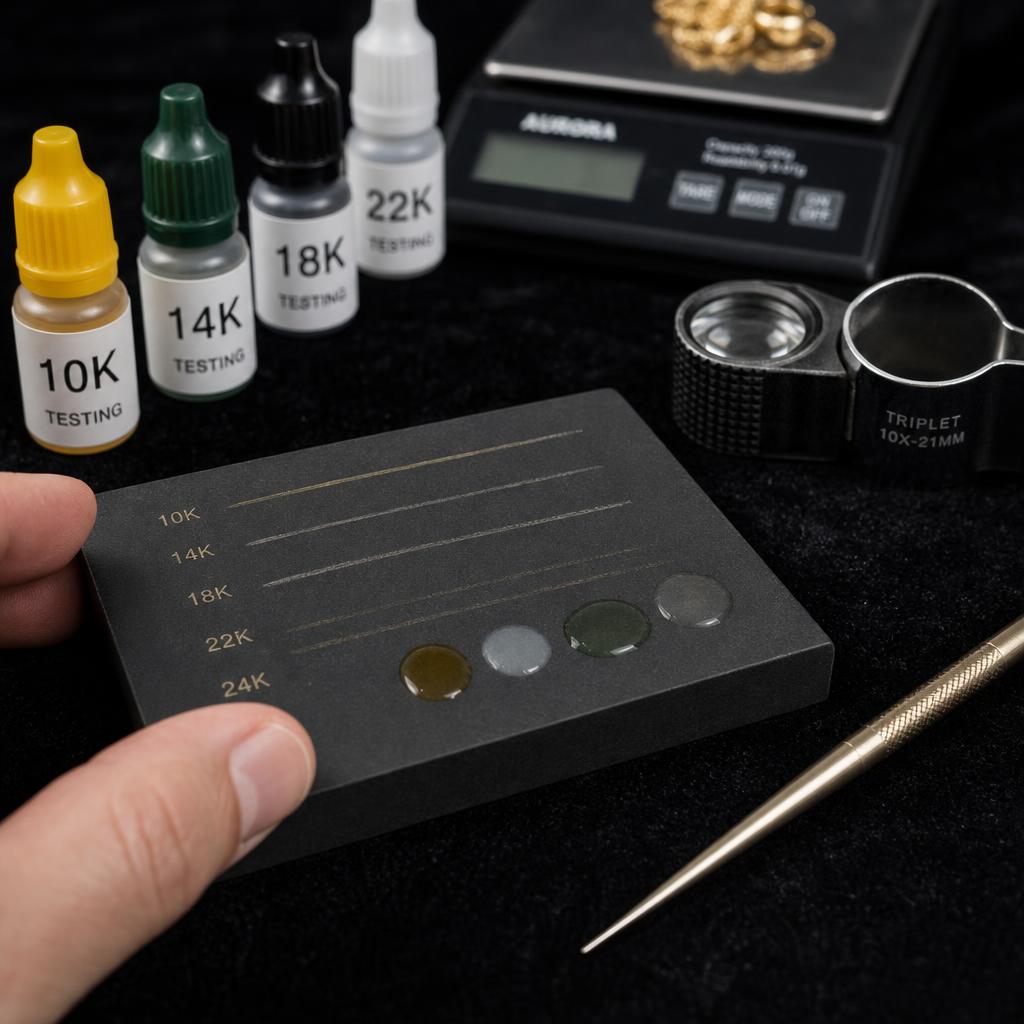
The scratch test is at least 2,500 years old — Greek merchants in Lydia used a version of it to verify electrum coins before gold and silver were separated. Today we still use it as a fast, inexpensive first screen for gold purity. Combined with our Sigma Metalytics scanner, it gives us a complete picture of what your item contains before we make an offer.
What You Need for a Scratch Test
- A touchstone — traditionally black basalt or slate, prized for its fine grain and resistance to acid
- A set of acid test solutions calibrated for different karat levels (10K, 14K, 18K, 22K acids)
- A set of known-purity test needles for comparison — pieces of verified 10K, 14K, 18K, and 22K gold
- Good lighting and a trained eye
Step-by-Step: How the Scratch Test Works
- 1The item is rubbed firmly against the stone, leaving a visible metallic streak about 1 cm long
- 2A comparison streak is made next to it using a test needle of suspected similar karat (e.g. 14K)
- 3The appropriate acid is applied to both streaks simultaneously
- 4The streaks are observed for 30–60 seconds while the acid reacts
- 5The reaction (or lack of it) is compared between the test piece and the known needle
How to Read the Acid Reaction
- No reaction — streak holds its color: indicates high purity (18K or above, matching the acid used)
- Slow dissolution with slight color change: suggests the piece is at or just below the tested karat level
- Rapid dissolution into bubbling: indicates the piece is significantly below the tested karat (or not gold)
- Turns greenish or disappears immediately: indicates brass, gold-plated base metal, or very low karat gold
- Streak matches the test needle identically: high confidence in the karat reading
A critical limitation: the acid reacts only with the metal in the surface streak. A gold-plated piece will pass a lower-karat acid test because the plating is pure gold — even if the base is copper. This is why we always confirm with the Sigma Metalytics scanner, which reads through the full depth.
What the Scratch Test Can and Cannot Detect
The scratch test accurately identifies approximate karat level for solid gold pieces in a few seconds. It's reliable for sorting jewelry into broad categories and flagging obvious non-gold items. It cannot reliably detect tungsten cores, thick gold plating over base metal, or very thin gold-filled items. For any coin or bar where counterfeiting is a concern, we go straight to the Sigma scanner.
Why We Still Use It
Speed is the scratch test's biggest advantage. When a seller brings in 20 pieces of jewelry, a quick scratch test on each allows us to sort them into likely karat ranges in under five minutes. The Sigma scanner then confirms the readings on pieces that matter most — high-value items, unusual pieces, and anything where the karat stamps are absent or illegible. Together, the two methods give us a complete, accurate assessment quickly.
Watch our full testing process in person — at no cost. Bring your gold to Gold Buyers Connecticut and we'll walk you through every step of our appraisal before making an offer.