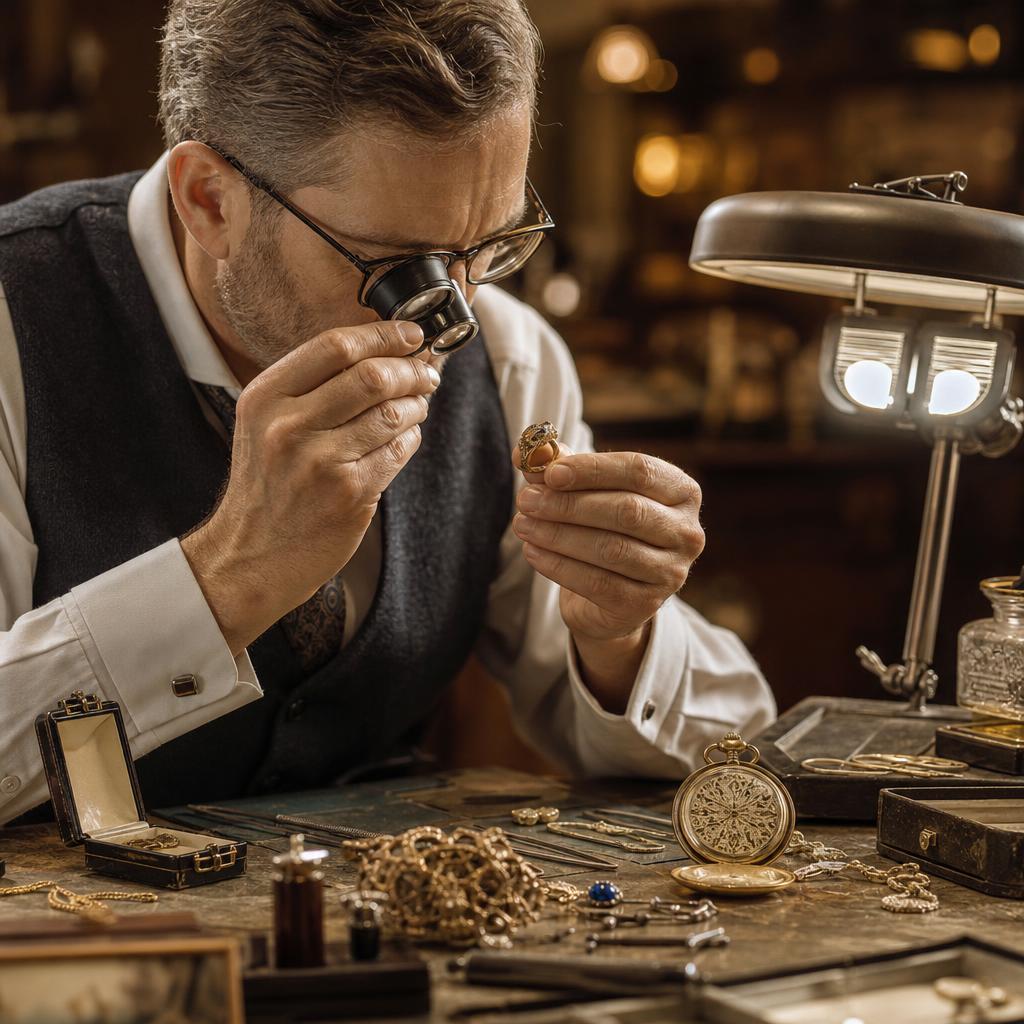
Estate jewelry — pieces inherited or acquired from someone else's collection — is one of the most misunderstood categories in the gold buying world. Sellers often don't know what they have, and that uncertainty can lead to either selling too quickly at too low a price, or holding onto pieces indefinitely out of confusion. This guide gives you a clear framework for approaching inherited jewelry before you sell.
What 'Estate Jewelry' Actually Means
The term 'estate jewelry' simply refers to previously owned jewelry — it doesn't need to come from an estate sale or a deceased person's belongings. It encompasses any secondhand fine jewelry, from Victorian brooches to a grandmother's 1980s diamond ring. The term often implies age and history, which can add value beyond the raw materials.
Inventory Everything Before You Sell Anything
Before approaching any buyer, lay out all pieces and photograph each one. Note any markings, stones, conditions, and any paperwork or receipts you may have. This inventory serves two purposes: it prevents pieces from getting mixed up or lost, and it gives you a reference point for comparing offers.
What Makes Estate Jewelry More (or Less) Valuable
Beyond the gold content, several factors significantly affect estate jewelry value:
- Designer or maker signatures — Pieces signed by Cartier, Tiffany, Van Cleef & Arpels, Bulgari, or other luxury brands command significant premiums beyond melt value
- Period and style — Art Deco (1920s–30s), Victorian (1837–1901), and Retro (1940s) pieces have collector markets
- Gemstone quality — A diamond's cut, color, clarity, and carat weight are assessed separately from the gold setting
- Provenance — Documentation of who owned the piece and when adds historical value
- Condition — Intact pieces in good condition are worth more than damaged or repaired ones
- Complete sets — A full parure (matching necklace, earrings, bracelet, brooch) is worth more than individual pieces sold separately
The biggest mistake estate jewelry sellers make: assuming the gold value IS the total value. A signed Cartier bracelet in 18K gold might be worth $800 in gold — and $4,000–$8,000 as a collectible piece. Know what you have before you sell.
How to Identify Valuable Estate Pieces
- Look for signatures or maker's marks inside rings, on clasps, or on the back of pendants
- Research the style — Art Deco pieces have geometric patterns and use platinum or white gold; Victorian pieces often feature flowers, serpents, or mourning imagery
- Check stones with a loupe — natural rubies, sapphires, and emeralds from before the 1960s are often more valuable than their synthetic modern equivalents
- Look for platinum settings (heavier than gold, slightly gray, often marked PT or PLAT) — platinum was used extensively in pre-WWII fine jewelry
Getting Multiple Opinions on Estate Pieces
For estate jewelry with potential collectible value, it pays to get more than one opinion. A gold buyer will assess the metal content accurately, but may not specialize in designer or period jewelry. An auction house like Christie's or Heritage Auctions specializes in that category but takes a significant commission. For pieces that might be exceptional, it's worth spending time to understand which channel will yield the best return.
Legal Considerations for Estate Jewelry in Connecticut
If jewelry comes from an estate that is in probate, technically the estate — not you individually — owns the assets until probate is settled. Selling assets before probate is closed can create legal complications. If you're unsure of the estate's status, consult with a Connecticut probate attorney before selling high-value items.
Why Old Saybrook Is a Strong Market for Estate Jewelry
Connecticut Shoreline's demographics — including a large and affluent retiree population and significant snowbird community — mean there is strong local supply of estate jewelry. Buyers in this market see high volumes of quality pieces and are experienced in accurately assessing them. This is good news for sellers: competition among buyers keeps offers competitive.
Gold Buyers Connecticut has extensive experience with estate and inherited jewelry. We assess gold content AND collectible value and will tell you if a piece might be worth more at auction. Free, honest appraisals — no obligation.